Spacecraft Atmosphere Monitor (S.A.M.)
A compact instrument deployed to the International Space Station to monitor cabin-air composition.
Overview
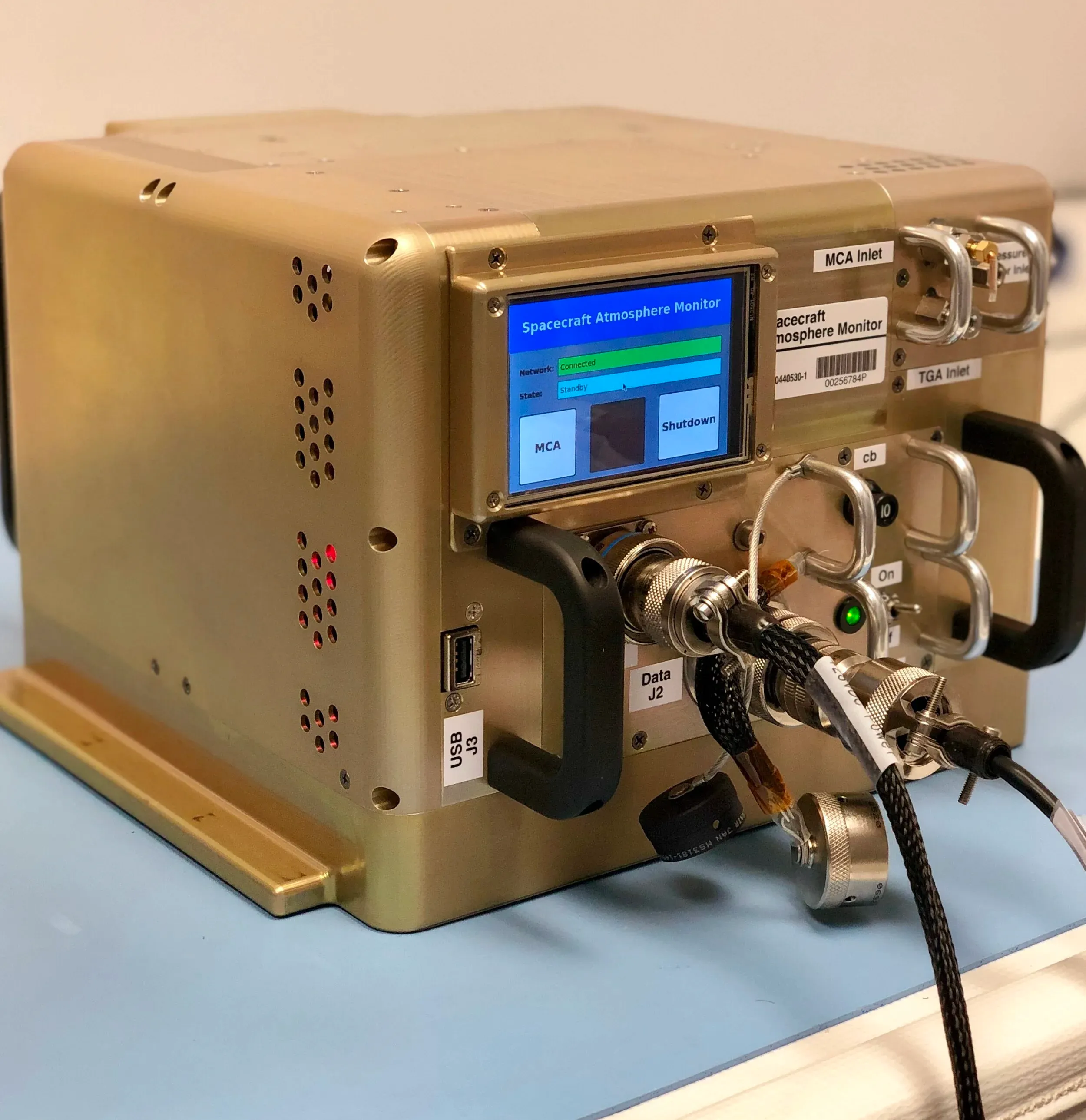
The Spacecraft Atmosphere Monitor (S.A.M.) is a compact gas chromatograph and mass spectrometer developed at NASA’s Jet Propulsion Laboratory to monitor cabin air aboard the International Space Station. It was designed to measure major atmospheric constituents, including oxygen, carbon dioxide, nitrogen, and methane, along with humidity and trace volatile organic compounds. Astronauts can operate it in an EXPRESS rack or move it to sample air in other parts of the station.
My Contribution
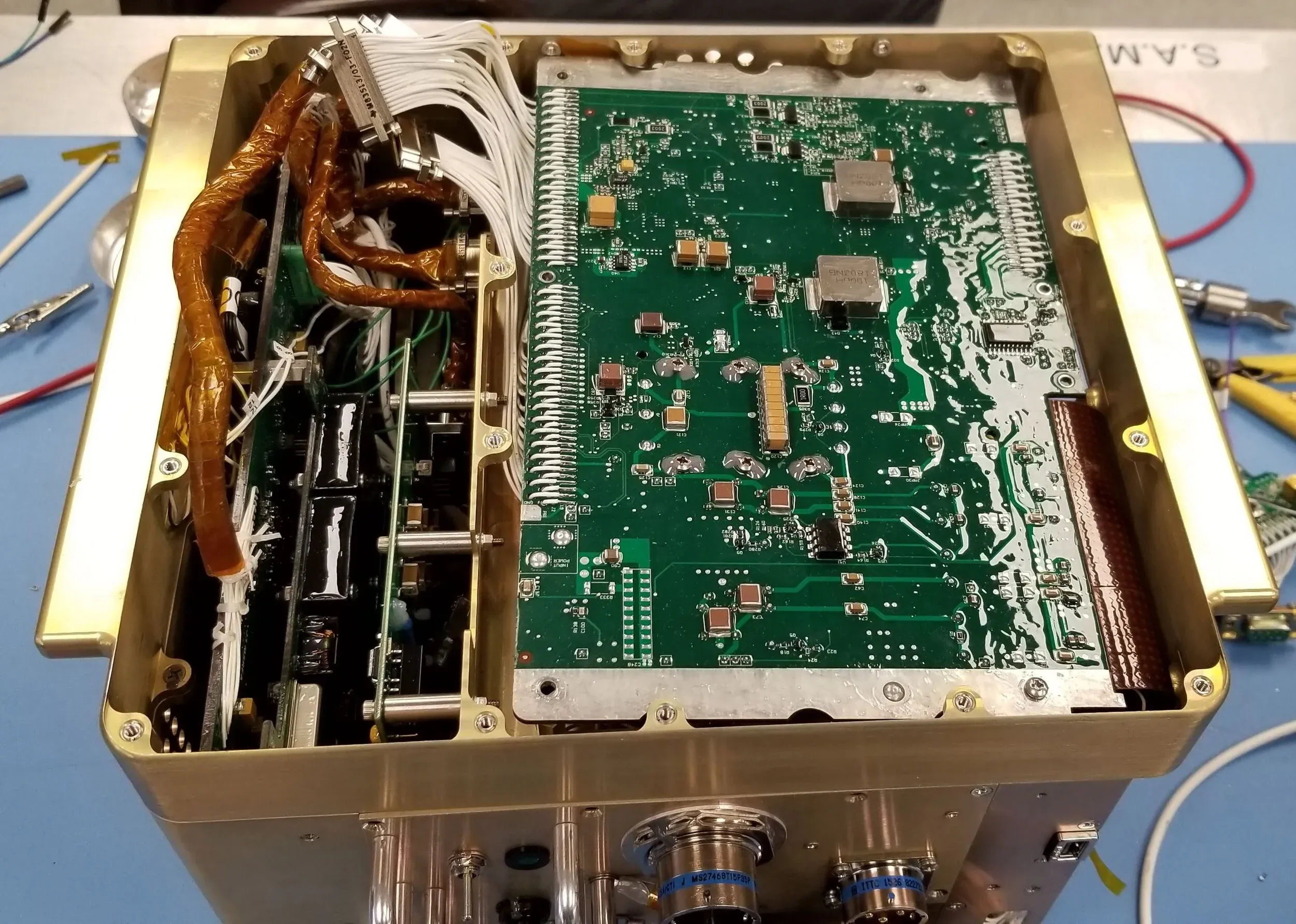
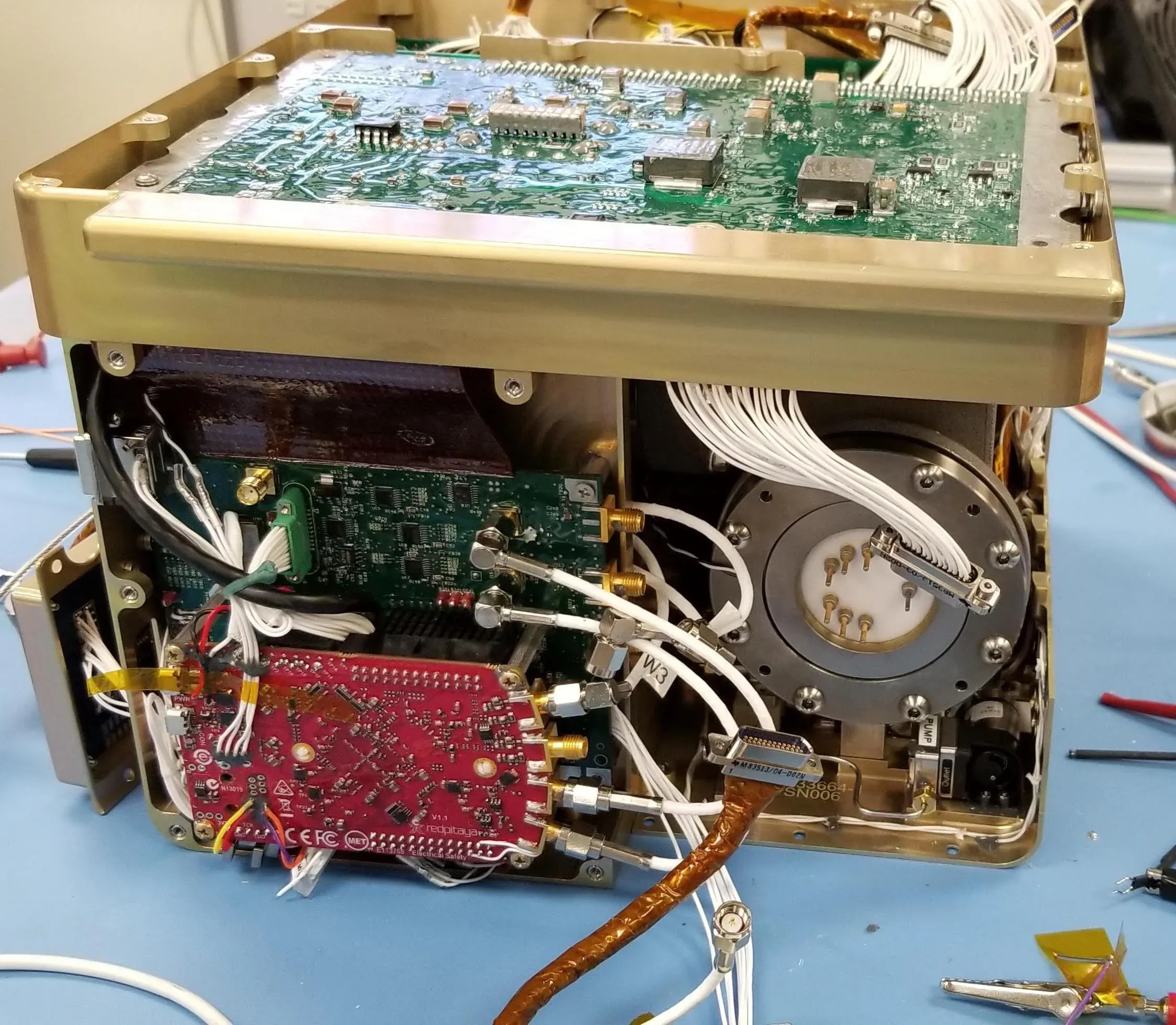
I joined the small development team while S.A.M. was still a prototype and stayed through flight-hardware delivery. The electronics had to fit a tightly packaged instrument while supporting low-power operation, instrument control, fault detection, and autonomous monitoring. My board-level work included schematic capture for new and revised designs. I designed a capacitor energy-bank and power-converter mezzanine board for critical fail-safe systems, and was responsible for redesigning and refining the main board that converts and distributes power, drives mass-spectrometer loads, and hosts the instrument’s CPU and FPGA.
I also developed Python and JavaScript tools to interface with electronics modules and manually test both individual boards and the integrated prototype. For lab work, I built prototype automation software and helped research scientists operate and debug the bench-top instrument. As the design moved toward delivery, I performed systematic functional tests and characterized flight electronics against subsystem requirements. I documented assembly and test procedures and worked with mechanical and integration leads on flight-instrument packaging.
Results
S.A.M. launched to the International Space Station aboard SpaceX CRS-18 on July 25, 2019. The flight instrument was designed to provide continuous atmospheric measurements and help validate crew-health technology for future exploration missions.